
The Symbolism of the Moon: West vs. East
The moon holds a special meaning for Koreans. When I asked people in Western cultures about the full moon, they often spoke of mysterious powers, werewolves, lunacy, or even a face on its surface.
But in Korea, where I grew up, the full moon is different.
In Korean literature, it often symbolizes longing and heartfelt wishes.
Seeing a full moon might bring to mind
the face of a loved one, or the memory of one’s hometown.
This appears not only in books but also in dramas and films,
where the moon often evokes nostalgia, melancholy,
or a moment of quiet reflection. Even in song lyrics,
the moon stirs emotions and imagery.
Korean Traditions and the Spirit of ‘Dalmaji’
The moon is not only a source of feeling but also of hope. In old Korean folk traditions, people would make wishes to the moon for a wide variety of hopes, from health and success to love and many other personal desires.
There is a holiday called Chuseok, similar in spirit to Thanksgiving. It follows the lunar calendar. A full moon always rises in the sky that night.
Families gather beneath it, making wishes together.
This act is called Dalmaji, meaning “welcoming the moon.”
On Chuseok Eve, the weather reporter will often say,
“This Chuseok, the weather will be clear, making it a perfect night for Dalmaji . welcoming the moon and making wishes.”
Thus, the full moon in Korea represents hope, desire,
and a moment to pause and reflect.
A Personal Journey: From Seoul to New Mexico
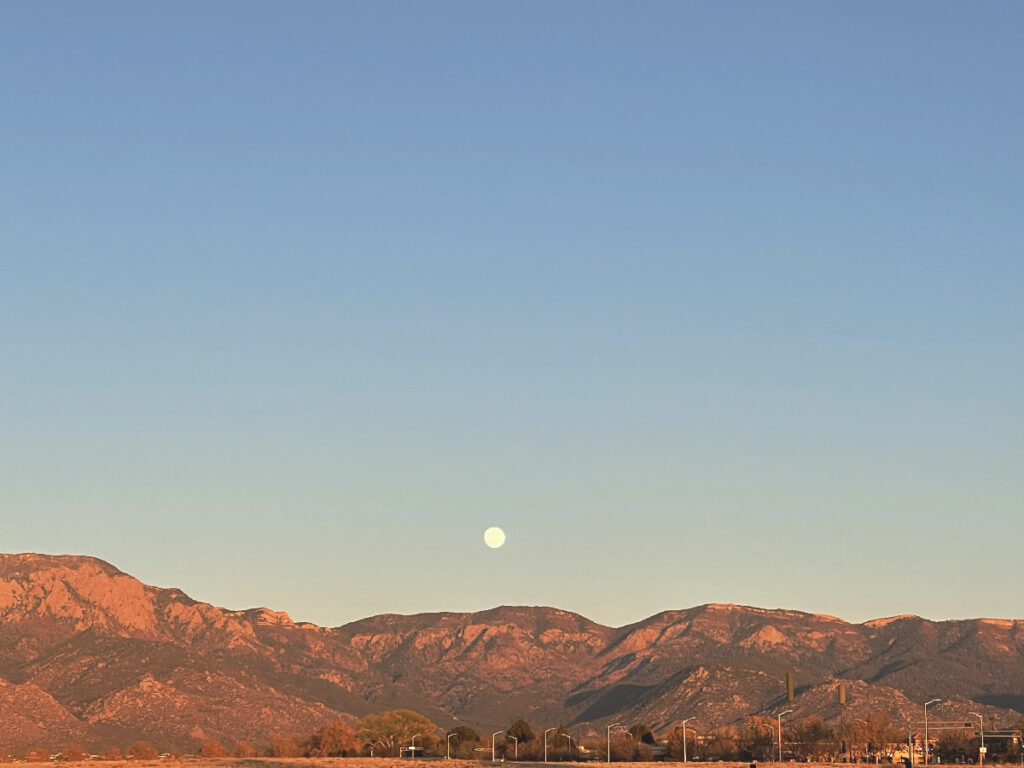
When I lived in the city in Korea, I wasn’t interested in the moon framed between tall buildings. But in the vast nature of New Mexico, watching the moon rise over the unobstructed horizon, I found myself making a wish without even realizing it.
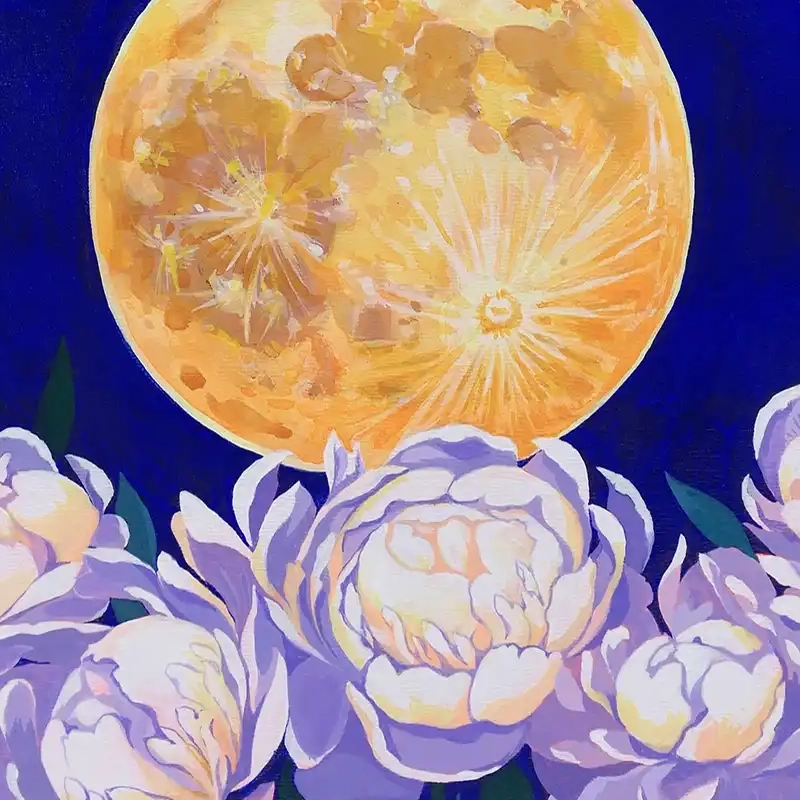
My art is more than a representation. It is a profound act of prayer. I paint with the hope that when this long tunnel ends, true stability will finally arrive. Even now, with every stroke, I continue to offer my wishes to the moon.
Related Reading : The Moon Jar Series
- Part1: [The History of Korea and the Moon Jar (1)]
– On the origins and the cultural significance of white. - Part2: [The History of Korea and the Moon Jar (2)]
– The Philosophy and Daily Life within the Moon Jar. - Part3: [The History of Korea and the Moon Jar (3)]
– A Name Born of Resilience and Lyrical Beauty. – Coming Soon