
Many people ask me about the Korean moon jar and the emotions Koreans associate with it, perhaps because I am Korean, grew up in Korea, and often paint the moon. But the story is not so simple. That is why I decided to write this text as a record of the cultural background behind the moon jar.
The Origin of the Moon Jar
Before talking about the moon jar itself, we should first look at the ordinary Korean storage jar.
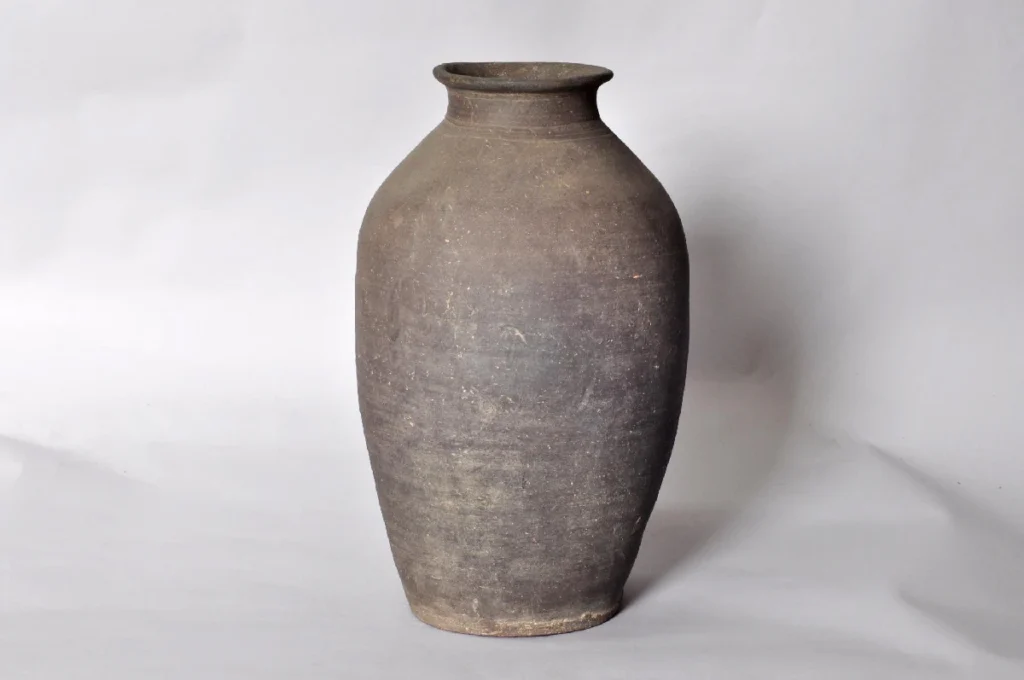
This earthenware storage jar is the origin of the moon jar. During the Goryeo Dynasty (10th–14th century), techniques for making earthenware developed significantly. Later, in the Joseon Dynasty (from the 14th century onward), these jars became deeply integrated into everyday life.
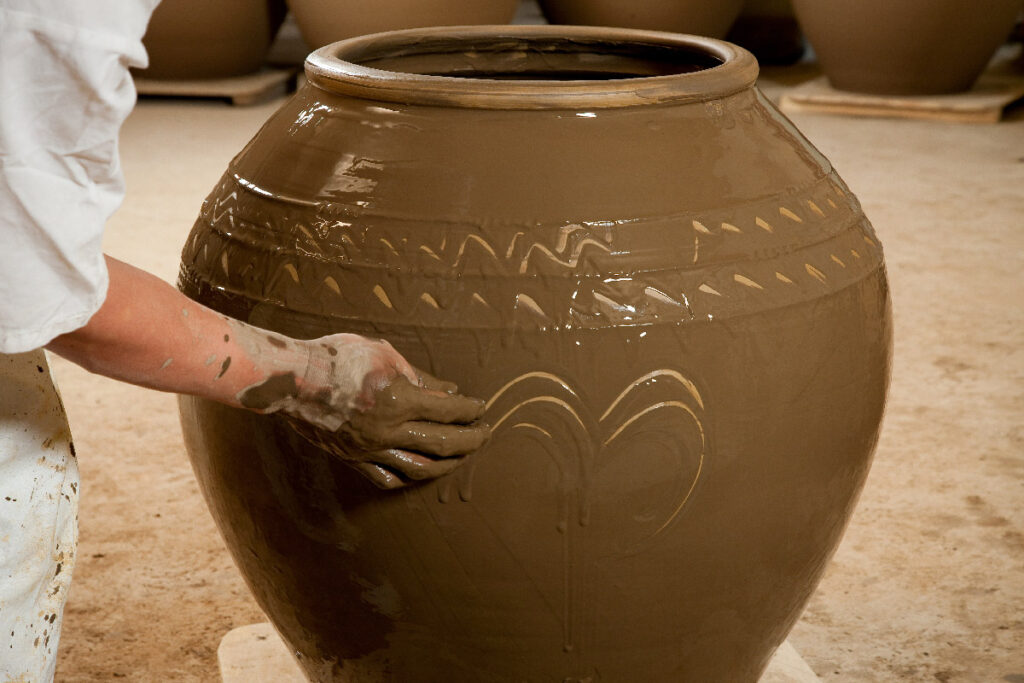
There is a particular technique used to make large jars. To create a vessel of this size, potters often throw the upper and lower halves separately on the wheel and then join them together. (In Korea, this technique is called updaji.)
During the Joseon Dynasty (14th–19th century), when large moon jars were produced for the royal court, craftsmen who specialized in making large storage jars were invited to create them. For this reason, the moon jar ultimately traces its roots back to the Korean earthenware storage jar known as onggi, particularly the type called hangari.
Why Is the Moon Jar White?
Korean earthenware jars are usually dark in color, such as grayish black, dark brown, or black. To understand why the moon jar is white, we must first look at the relationship between Koreans and the color white. Koreans even referred to themselves as Baekui Minjok, which literally means “the white-clad people.”
Strictly speaking, however, the color was not always pure white. It often leaned toward natural tones, ranging from pale ivory to soft gray. From hemp and ramie to silk, cotton, and various other fibers, the organic shades of these materials formed a spectrum that Koreans simply embraced as ‘white.’ This reflects a fundamental difference between Eastern and Western ways of perceiving and categorizing color.
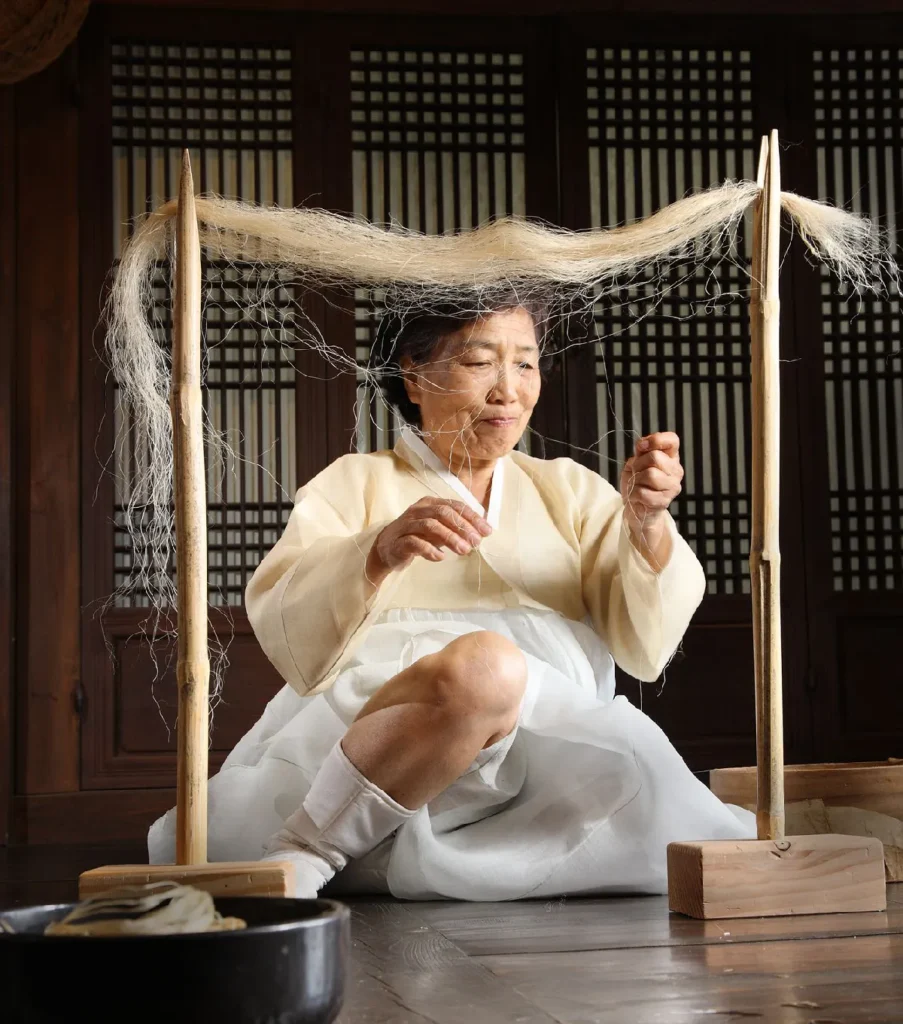
The artisan’s attire exemplifies the “natural white” tones derived from traditional materials.
© National Heritage Administration, Republic of Korea.
In the late 13th century,
During a period of heavy Chinese political influence, the authorities banned clothing of natural colors that people had long favored, forcing them to wear black garments instead. However, such regulations failed to change everyday habits.
By the 14th century,
Neo-Confucianism, a philosophical system introduced from China, had become the dominant ideology of society. Neo-Confucian thought emphasized inner purity and moral integrity rather than colorful decoration or outward display. Bright colors were often viewed as symbols of luxury or excess.
Within this worldview, white came to represent purity and a clean heart. White clothing is difficult to maintain because it stains easily. For this reason, keeping white garments clean was sometimes seen as a form of personal discipline and self-improvement. Perhaps from this period onward, Koreans developed an even deeper attachment to the color white.
Interestingly, despite being a Confucian society, China did not favor white clothing, as it primarily symbolized death and mourning.
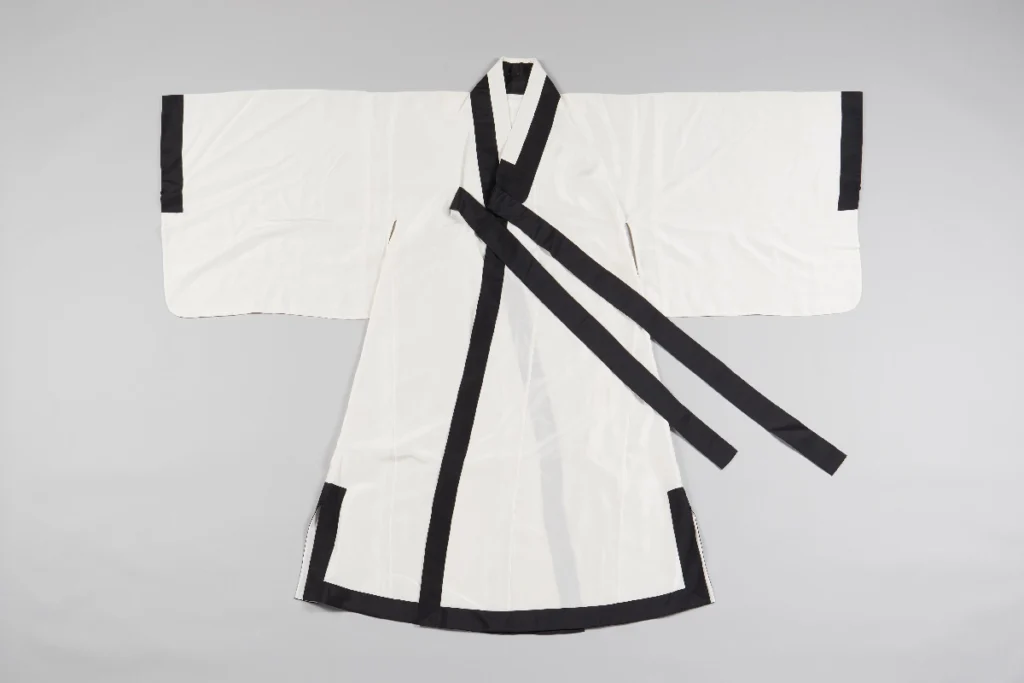
Its striking white and black contrast symbolizes the scholar’s inner purity and clear moral boundaries. Late Joseon Dynasty(18th–19th Century). © National Museum of Korea (e-Museum).
In the early 15th century,
the Korean state attempted to encourage people to wear blue clothing, based on the philosophy of Yin-Yang and the Five Elements. There were even patrols that would splash dye or ink onto white garments when they saw them on the street. Despite this, people continued to wear white.
By the 18th century
the situation had changed somewhat. This period was a Korean renaissance. It was a time of social stability, flourishing scholarship, and growth in both the arts and the economy. Yet even during this time, policies again appeared that attempted to discourage white clothing. The argument was that the color resembled mourning clothes, which many saw as a sign of bad luck. Nevertheless, people continued to wear white as they always had.
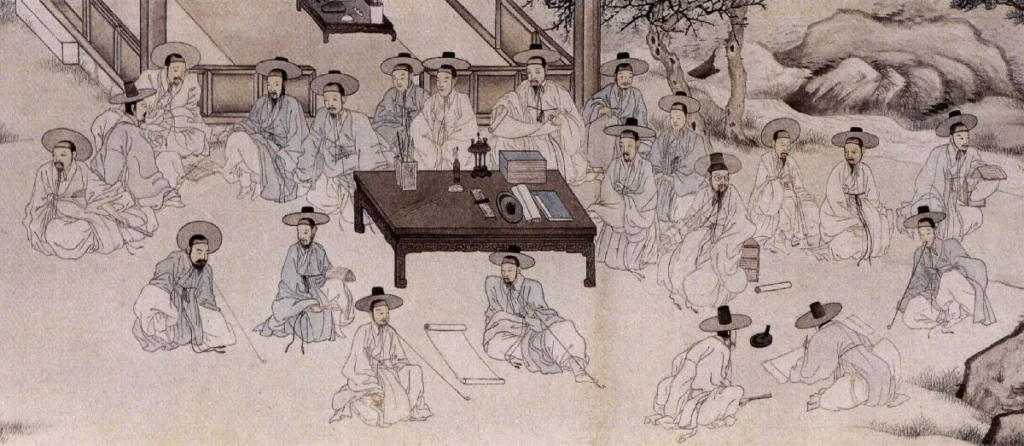
showing figures dressed predominantly in traditional white, with a few wearing pale blue robes over their white garments.
Yu Suk, 1853. © Korea Copyright Commission.
During the early 20th century
in the period of Japanese colonial rule, another attempt was made to suppress white clothing. Authorities claimed that it was unsanitary and unsuitable for modernization and ordered people to wear colored garments instead. But many people refused to comply. From this point on, white clothing also became a symbol of national resistance.
What began as a practical choice in everyday life gradually became connected to philosophy and eventually even to resistance. Because of this history, the Korean attachment to white carries a unique and layered meaning. In this cultural context, the white surface of the moon jar is more than just a color choice. It reflects a profound Korean sensibility.
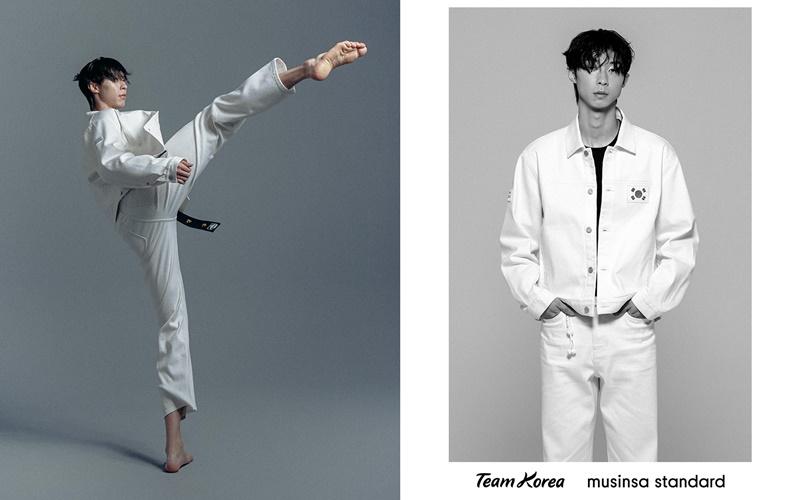
Designed by Musinsa Standard. © Musinsa.
Today, many Koreans tend to wear black clothing rather than white for practical reasons. In modern urban environments, it is difficult to keep white clothes clean because of dust, pollution, and everyday wear.
While black may dominate our wardrobes, this aesthetic preference has simply shifted to our surroundings. The Korean love for white remains remarkably strong in modern life, as seen in the popularity of white home appliances, minimalist furniture, and the overwhelming number of white cars on the road. The same sensibility that once shaped the moon jar still defines the clean, serene aesthetic of contemporary Korea.
In my own paintings, there is almost no white. Yet the quiet presence of white seems to linger. Perhaps this is something I have learned from the culture I grew up in.
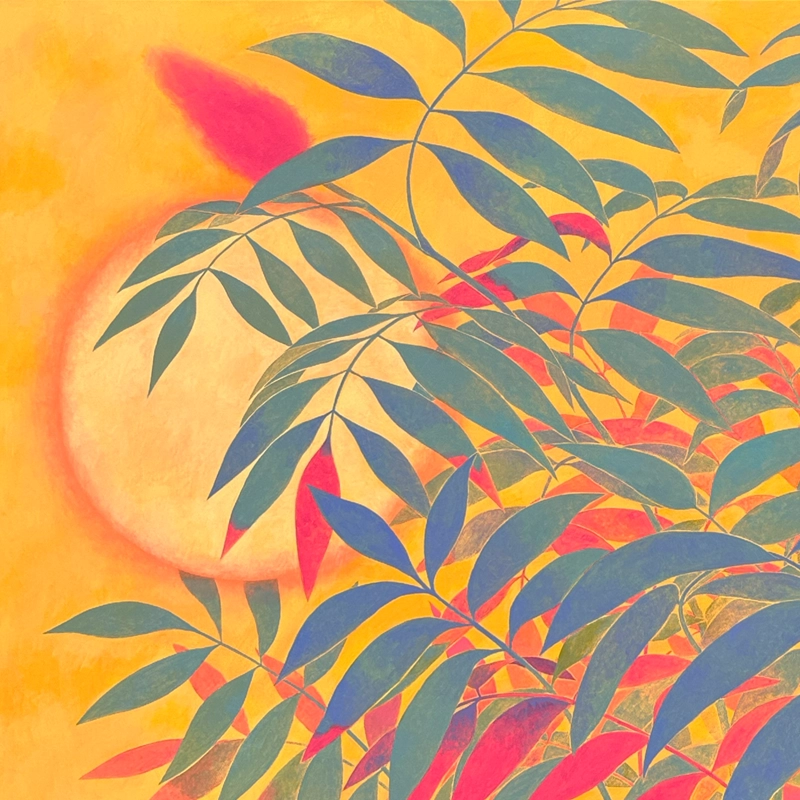
The Moon Jar Series: History and Identity
- Part1: [The History of Korea and the Moon Jar (1)]
– On the origins and the cultural significance of white. – Currently Reading - Part2: [The History of Korea and the Moon Jar (2)]
– The Philosophy and Daily Life within the Moon Jar. - Part3: [The History of Korea and the Moon Jar (3)]
– A Name Born of Resilience and Lyrical Beauty. – Coming Soon
Related Reading
Image Sources
- e-Museum (National Museum of Korea): https://www.emuseum.go.kr/
- National Heritage Administration: https://www.heritage.go.kr/
- Gongu Madang (Korea Copyright Commission): https://gongu.copyright.or.kr/
- Musinsa Standard (Korea’s modern fashion brands.)