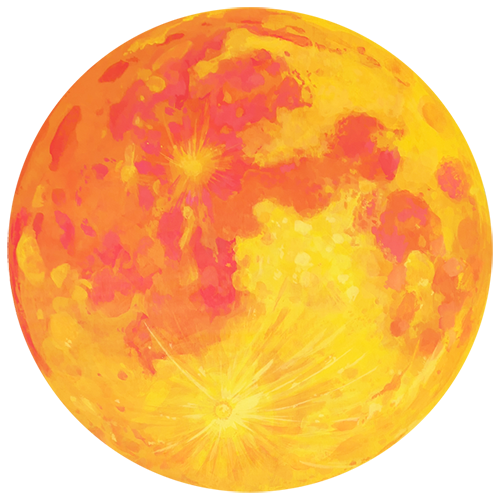
Artist’s note: A Prelude
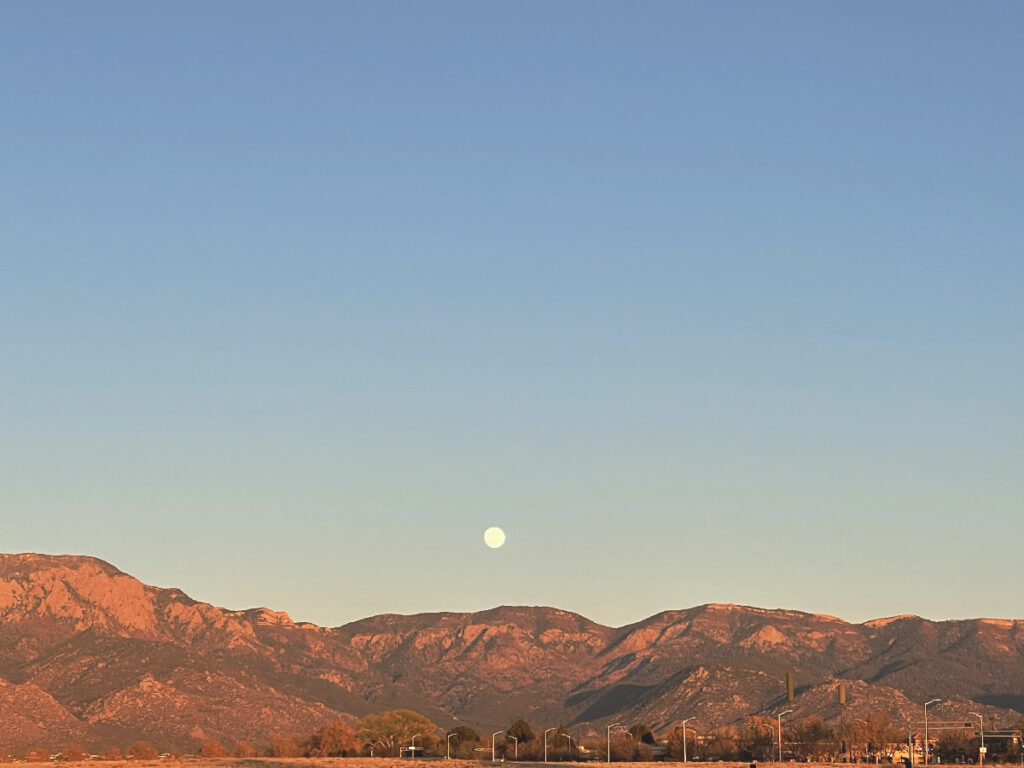
While the moon is often associated with mystery or supernatural powers in Western culture, it holds a more profound meaning for Koreans. To me, the moon has always been a symbol of longing and a listener of heartfelt wishes. Having lived among the tall buildings of a city, the moon once felt distant, but watching it rise over the vast, unobstructed horizon in New Mexico, I found myself instinctively offering a prayer to the moonlight.
How is the moon perceived differently in the West and the East?
To Koreans, the moon carries a weight entirely different from its perception in the West. In Western cultures, the moon is often associated with mystery, folklore, or even madness. However, for those of us born and raised in Korea, the moon is a universal symbol of ‘longing.’
Because the moon remains the same wherever it is viewed, those away from home look up at it to cherish memories or connect with loved ones. It frequently appears in our media as a luminous canvas—a shared space where people, though separated by distance, look up at the same moon to bridge their hearts in silent longing.
The Spirit of ‘Dalmaji’(welcoming the moon)
For Koreans, who have historically lived by the lunar calendar, the full moon holds a profound significance. It symbolizes the abundance of the harvest, a time celebrated during Chuseok, our mid-autumn festival. On this night, families gather under the radiant light to perform Dalmaji, the tradition of welcoming the moon. Weather reports during Chuseok often focus on whether the sky will be clear enough for this ritual. For us, the full moon is a sign of both plenty and deep, personal hope.
A Vessel for Wishes and History
Historically, the moon’s role in Korean folk belief is deeply significant. Traditionally, people would fill a clean bowl with fresh water to catch the moonlight, offering their heartfelt wishes into the reflection.
Beyond tradition, Koreans envisioned the moon as a kind of utopia. In 1444, the scholar Jeong In-ji named a pavilion Gwanghallu, meaning ‘a palace on the moon.’ Within its grounds lies Wanwoljeong, or ‘a pavilion for admiring the moon.’ Our ancestors did not see the moon as a distant object; it was a familiar presence that lived and breathed alongside them.
Learn more about Gwanghallu on Google Maps
The Horizon of New Mexico and My Artistic Journey
In the city of Seoul, the moon was often just a fragment framed between tall buildings. But in the vast nature of New Mexico, watching the moon rise over the unobstructed horizon, I found myself instinctively whispering prayers. My painting began as a profound prayer, born from a long, dark tunnel and a yearning for stability. As my practice evolves, the specific wishes I whisper to the moon may shift, but the core of my heart remains the same. I paint the moon with the hope that my prayers, now grown into a broader vision, can offer comfort to those who see them.
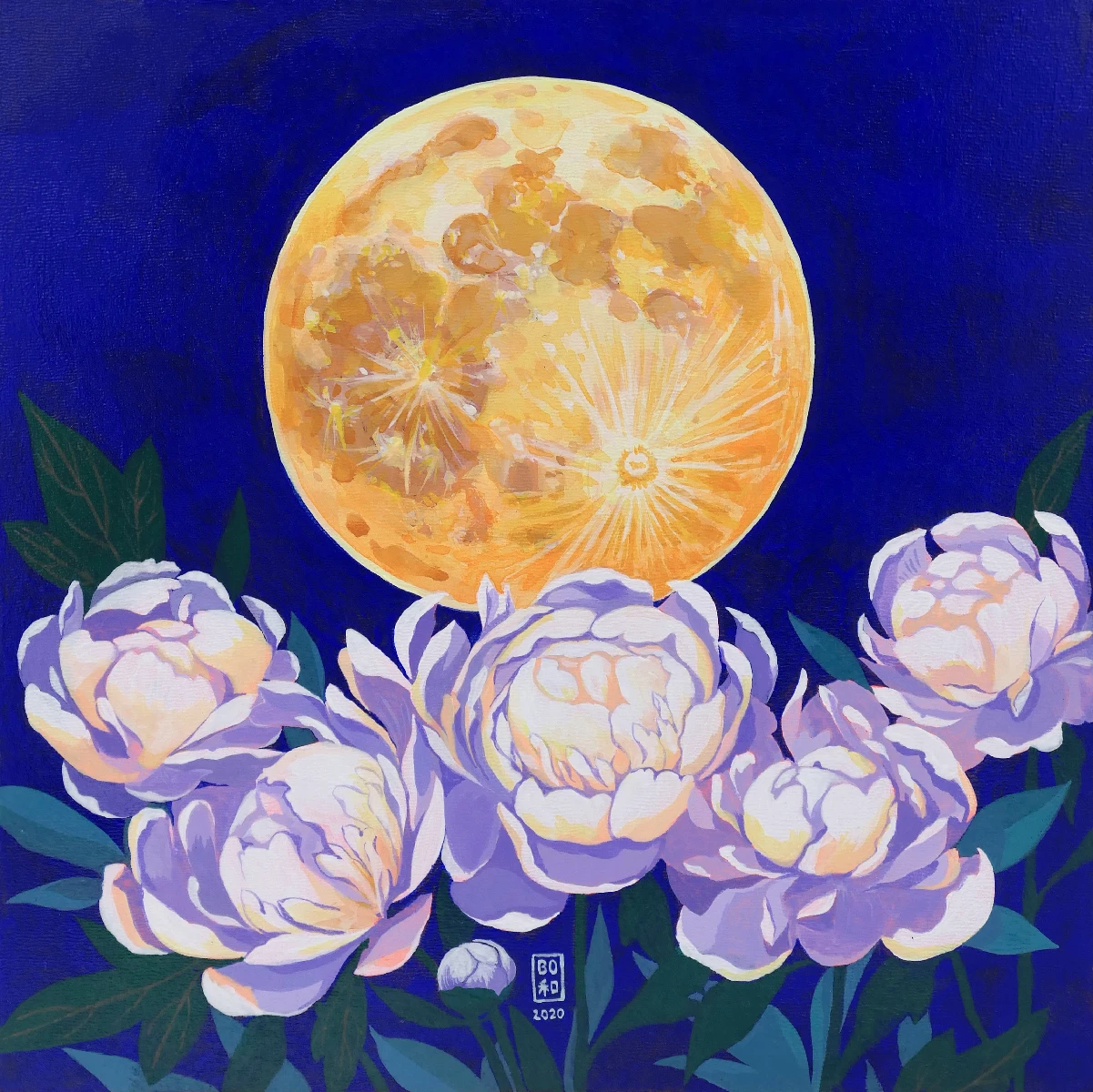
If you would like to explore the deeper roots of this fascination, I have documented the history and identity of the Moon Jar, which embodies the Korean people’s long-standing connection to the moon.
Related Exploration: The Moon Jar Series
- Part1: [The History of Korea and the Moon Jar (1)]
– On the origins and the cultural significance of white. - Part2: [The History of Korea and the Moon Jar (2)]
– The Philosophy and Daily Life within the Moon Jar. - Part3: [The History of Korea and the Moon Jar (3)]
– A Name Born of Resilience and Lyrical Beauty.