I traveled to Korea after a long time to attend my younger sibling’s wedding.
I spent joyful days reconnecting with people I had missed.
As the day to return to the United States, where my husband lives, drew closer,
martial law was suddenly declared.
At first, I thought it was no more than a rumor circulating online.
But when I turned on the television and watched the news for myself,
I had to confront the reality of the situation.
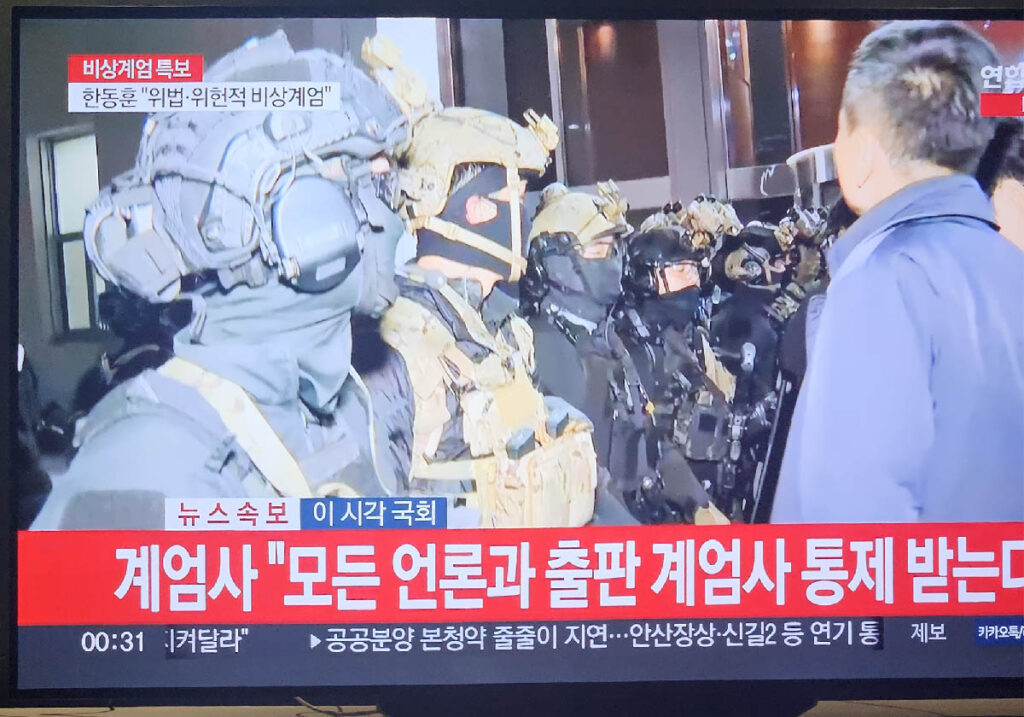
A caption at the bottom reads, “All media and publications are subject to martial law control.” (2024)
Military helicopters appeared in the sky, armored vehicles moved through the streets,
and armed soldiers were deployed at the National Assembly.
Citizens stood in the roads, using their bodies to block the armored vehicles
from reaching their destination.
At that moment, the U.S. embassy announced
a complete suspension of visa services.
Anxiety about whether I would be able to reunite with my husband in the United States
kept me glued to the live broadcasts.
Fortunately, the martial law was lifted after six hours.
Yet once I boarded the airplane,
the brief relief of knowing I would see my husband again quickly gave way to new worries.
I wondered whether the situation had truly ended,
whether it might happen again,
and whether my family and friends still in Korea were safe.
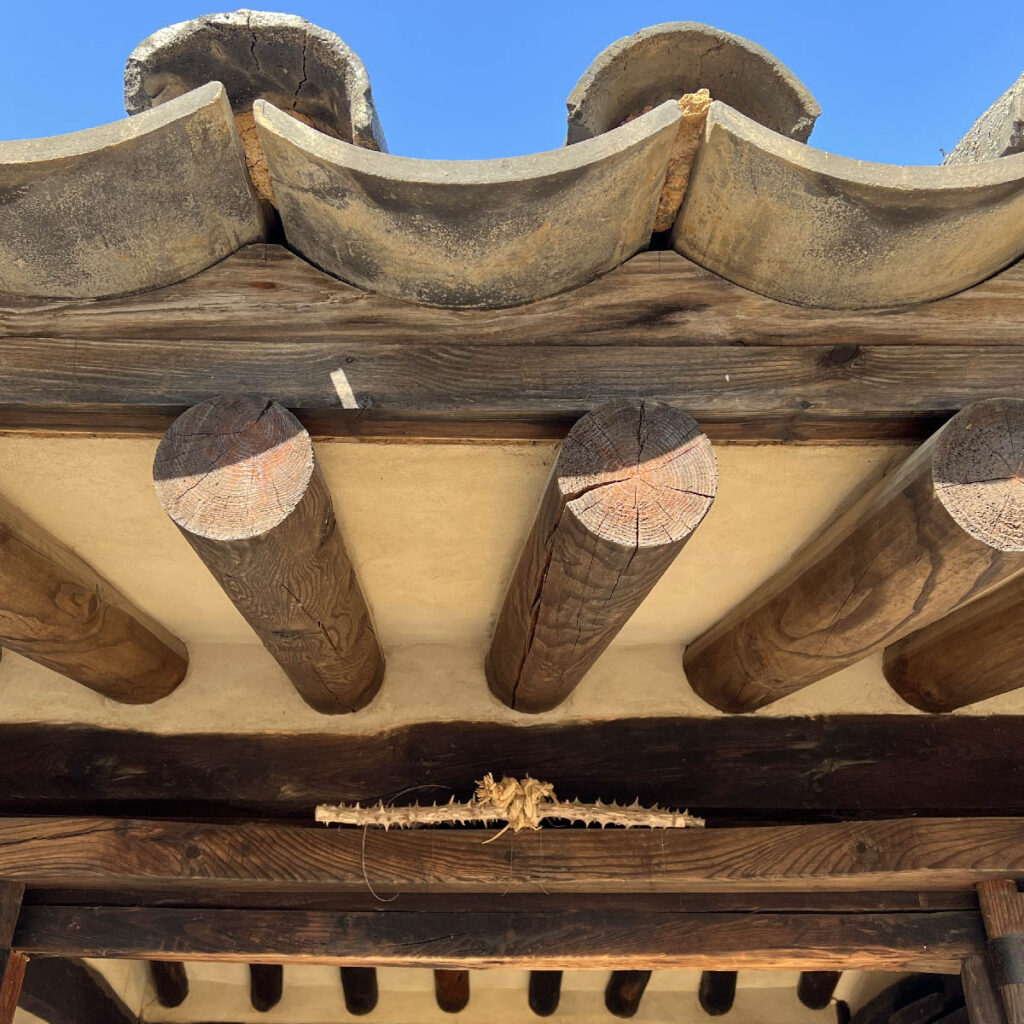
-National Folk Museum of Korea. (2024)
After the shocking events of December 3, 2024,
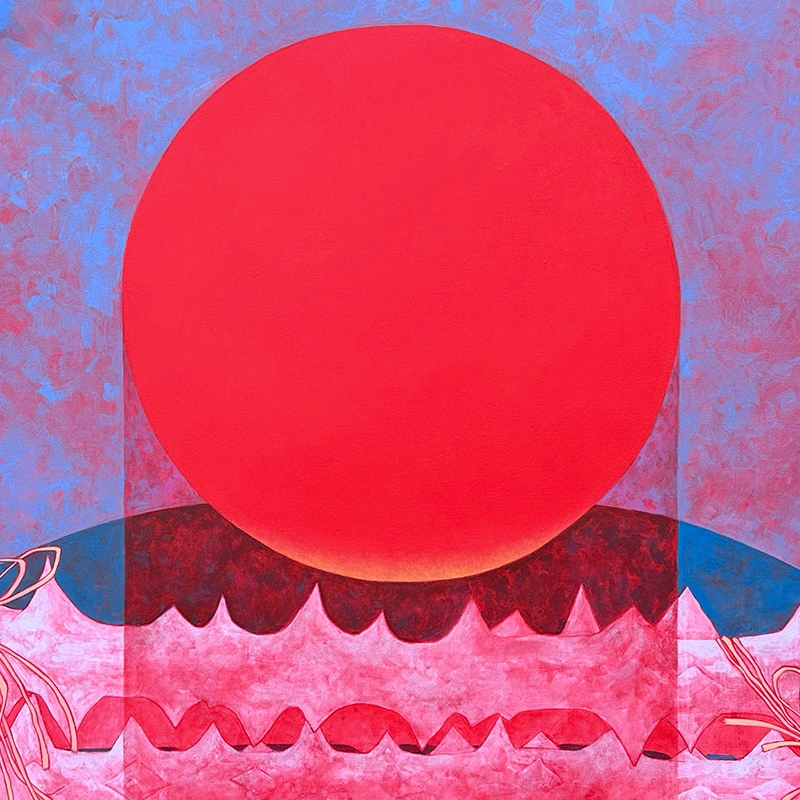
I sat in front of the canvas as I welcomed the year 2025.
Facing the blank surface, the confusion of that day returned to me,
along with a memory of the castor aralia branches I had seen
at the National Folk Museum of Korea during my visit.
Hanging beneath the eaves was a castor aralia branch.
Castor aralia is a tree deeply connected to everyday life in Korea,
used both as a medicinal plant and as food.
Its thorn-covered branches were traditionally hung above doorways
to keep illness and harmful forces from entering the home.
Thinking of that gesture,
and hoping that confusion would no longer cross over into our lives,
I painted castor aralia branches into the work.